
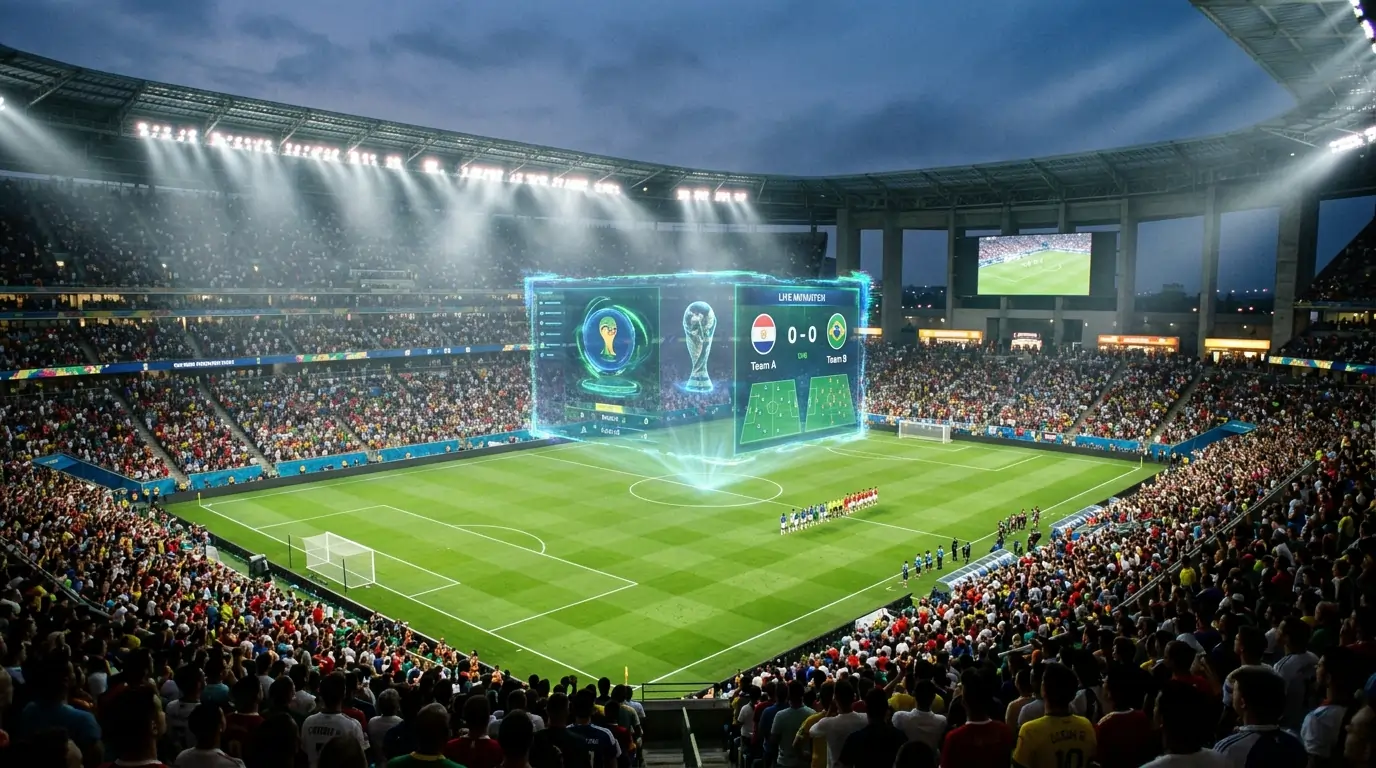
For the first time in its 96-year history, the biggest sporting event on earth has completely ripped up its own rulebook to add 16 extra teams.
Quick Answer: What Is the Round of 32?
The Round of 32 in the 2026 World Cup is the brand-new opening stage of the knockout bracket, featuring the 32 teams that successfully survived the group phase. It is a single-elimination, win-or-go-home round where the loser is immediately sent packing. To reach this round, teams must finish in the top two of their group or qualify as one of the eight best third-place teams. From this point forward, a nation must win five consecutive matches to lift the World Cup trophy.
Why the 2026 World Cup Is Making History
If you watched the World Cup in previous years, you probably remember a 32-team tournament that jumped straight into the Round of 16. That classic, beloved format is officially gone forever.
For the 2026 tournament hosted by the United States, Canada, and Mexico, FIFA expanded the playing field to a massive 48 teams. This massive expansion meant the traditional mathematical bracket no longer worked.
To solve this scheduling problem, FIFA introduced the Round of 32. This extra knockout round turns the path to global glory into an absolute gauntlet.
Winning the World Cup now requires surviving eight total matches instead of seven. It tests roster depth, stamina, and coaching strategy like never before in the history of soccer.
How Do Teams Qualify for the Round of 32?
During the early group stage, the 48 teams are divided into 12 groups of four. Every team plays three matches against their immediate group rivals to earn points on the board.
A win is worth three points, a draw is worth one point, and a loss gets you zero. Once all three group matches are finalized, the top two teams from each of the 12 groups automatically advance to the Round of 32.
That accounts for 24 teams securing a guaranteed spot in the sudden-death bracket. But the tournament mathematics dictate that we need exactly 32 teams to make a functional bracket work.
That is where the brand-new wild card system comes into play. The final eight spots go to the eight best third-place teams across the entire tournament.
The Wild Card Rule: How Third-Place Teams Survive
Think of the best third-place teams just like the NFL Wild Card slots. You did not win your division, but your overall record was still good enough to sneak into the playoffs.
FIFA takes all 12 teams that finished third in their respective groups and compares their overall tournament records. The top eight teams on that list get a lifeline, while the bottom four are sent home.
Officials rank these teams based on total points earned in the group stage. If multiple teams are tied on points, FIFA uses a strict series of tie-breakers to decide who gets the final playoff tickets.
First, they look at goal difference, which is simply the number of goals scored minus the number of goals allowed. If they are still tied, it comes down to total goals scored, followed by a disciplinary score based on yellow and red cards.
The New Tie-Breaker Rule You Need to Know
Speaking of tie-breakers, the 2026 World Cup features a massive rule change for teams tied within their own group standings. In past tournaments, overall goal difference was always the ultimate deciding factor.
This year, FIFA shifted the primary tie-breaker to head-to-head records. If the USA and England finish tied on points, the first question is simply who won the physical match between them.
This brings the World Cup much closer to how the NFL and NBA handle division standings. It rewards teams for winning crucial, direct matchups rather than just blowing out weaker opponents to pad their stats.
If the tied teams played to a draw in their head-to-head match, the tie-breaker then shifts back to overall goal difference. This subtle rule change makes late group stage games incredibly tense and highly tactical.
What Happens in a Round of 32 Game?
Once the Round of 32 officially kicks off, the points and group standings no longer matter at all. The tournament shifts into a pure, single-elimination bracket just like NFL playoff football.
There are no second chances, no safety nets, and no playing for a safe draw. Every single game must produce a clear winner on that exact day.
If a top-seeded powerhouse gets upset by a lucky wild card team, their tournament is instantly over. It is the ultimate pressure cooker, comparable to a Game 7 in the NBA Playoffs happening every single night.
Overtime and Penalty Shootouts Explained
Because every Round of 32 match demands a winner, regular soccer rules are slightly altered for the knockout stage. A standard soccer match lasts for 90 minutes, plus a few minutes of added stoppage time for injuries.
If the score is tied at the end of that 90 minutes, the game moves directly into extra time. Extra time consists of two 15-minute halves, giving teams 30 total minutes of bonus play to find a winning goal.
Unlike the NFL's sudden-death overtime, there is no "golden goal" rule in the World Cup. Teams must play the entire 30 minutes of extra time regardless of who scores first.
If the teams are somehow still tied after 120 total minutes of grueling soccer, the match goes to a penalty shootout. Five players from each team take alternating penalty kicks from 12 yards out, and the team that scores the most advances.
How the Bracket Is Structured
Unlike the UEFA Champions League or other club tournaments, there are no live random draws for the knockout stages. FIFA maps out the entire Round of 32 bracket months before the tournament even begins.
Each group position maps to a specific, fixed slot on the tournament tree. This means fans can predict their team's path to the final much like filling out a March Madness bracket.
The placement of the eight wild card teams is a bit more complicated. FIFA uses a massive mathematical grid to slot the third-place teams based on which specific groups they originally came from.
The only strict rule is that a third-place team cannot play against a team from their own group in the Round of 32. This structure ensures fresh, exciting matchups and prevents immediate, repetitive rematches.
The Role of Strategy and Roster Depth
Because the tournament is now significantly longer, squad depth is the ultimate secret weapon for the 2026 World Cup. A starting lineup of eleven superstars is no longer enough to win the whole thing.
Coaches must strategically rotate their bench players during the group stage to keep legs fresh for the grueling knockout bracket. A tired, overworked team in the Round of 32 is highly vulnerable to a massive upset.
Yellow card accumulation also becomes a massive strategic headache for international managers. If a player receives two yellow cards across different matches, they are automatically suspended for the next game.
With the addition of the Round of 32, players have to survive more matches without picking up silly fouls. Losing a star quarterback-equivalent to a suspension in a win-or-go-home game can completely destroy a nation's World Cup dreams.
Why This Format Makes the Group Stage Better
You might think expanding the tournament waters down the competition, but the Round of 32 actually makes the early games much better. The chaotic race for those eight third-place spots keeps almost every team mathematically alive until the very last day.
In older World Cups, a team that lost its first two matches was usually eliminated immediately. Now, a massive, high-scoring win in their third match might be enough to steal a wild card spot.
This means viewers get fewer meaningless games at the tail end of the group stage. Every single goal scored or conceded can drastically alter the final wild card rankings.
It also forces the powerhouse teams to keep their foot on the gas. Securing a first-place group finish guarantees a matchup against a theoretically weaker second or third-place team in the Round of 32.
Key Dates for the 2026 Knockout Stage
The historic first-ever Round of 32 takes place over six action-packed days of football. Matches are scheduled from June 28 through July 3, 2026.
There will be multiple knockout matches played per day, completely dominating the global sports calendar. These elimination games are spread across multiple host cities in the US, Canada, and Mexico.
The winners of these 16 matches will immediately advance to the Round of 16, which runs from July 4 to July 7. The incredibly quick turnaround means teams have very little time to rest and recover.
From there, the surviving teams will push toward the quarterfinals and semifinals. It all culminates in the grand finale at MetLife Stadium in New Jersey on July 19.
Why the Margin for Error Is Gone
The introduction of the Round of 32 officially transforms the FIFA World Cup into the most grueling tournament in global sports. Earning a championship trophy now requires enduring a five-game sudden-death gauntlet against the best athletes on the planet.
Casual fans and die-hard supporters alike are in for an incredible, unpredictable ride. When the Round of 32 kicks off, expect pure chaos, dramatic upsets, and unforgettable moments.