
Imagine running non-stop for 90 brutal minutes on the world's biggest athletic stage, only to realize your fate will be decided by a single, nerve-wracking kick from 12 yards away.
Quick Answer: What Happens If a World Cup Game Ends in a Tie?
If a World Cup game ends in a tie during the group stage, the match simply ends and both teams walk away with one point in the standings. However, if a World Cup game ends in a tie during the win-or-go-home knockout bracket, the teams must immediately play 30 minutes of extra time.
If the score is still deadlocked after that extra period, the match cannot end in a draw. The undisputed winner is finally crowned through a dramatic, best-of-five penalty shootout.
The Big Difference: Group Stage vs. Knockout Stage
To understand soccer tiebreakers, you first have to understand what phase of the World Cup is currently being played. The tournament is split into two distinct halves: the early group stage and the later knockout stage.
During the group stage, teams are simply trying to earn enough points to advance out of their four-team pods. Because of this points-based system, a game ending in a tie is perfectly acceptable.
In the soccer world, a tie is officially referred to as a "draw." If the referee blows the final whistle and the score is level, both nations are awarded exactly one point.
This is very different from American sports, where regular-season NFL or NBA games almost always force an overtime period to find a winner. In group-stage soccer, teams will often play defensively in the final minutes just to protect that single, valuable point.
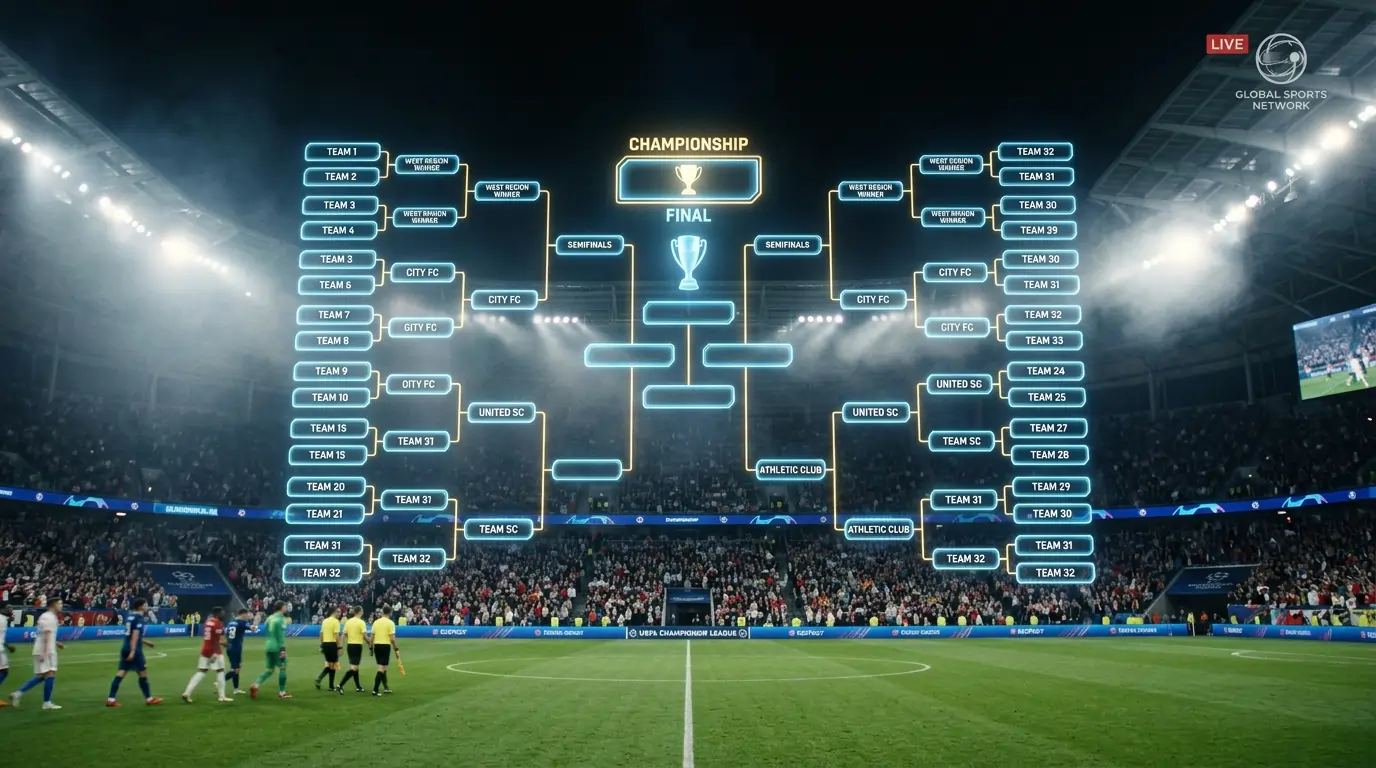
However, once the tournament reaches the knockout rounds, safety nets are completely eliminated. This is the single-elimination bracket, functioning exactly like March Madness or the NFL Playoffs.
Because a team must advance to the next round, a draw is mathematically impossible. Every single knockout match must produce a definitive winner on that exact day.
How Soccer Extra Time Actually Works
When a knockout match is tied after the standard 90 minutes of regulation, the game immediately moves into extra time. This is soccer's version of overtime, but the rules are highly unique.
Extra time consists of exactly 30 additional minutes of gameplay. It is split evenly into two 15-minute halves, with a very brief break in between for players to switch sides of the field.
Unlike the NFL's sudden-death overtime rules, extra time in soccer must be played in its absolute entirety. There is no "golden goal" rule where the first team to score automatically wins the match.
If Team A scores a phenomenal goal in the first minute of extra time, they do not get to celebrate a victory just yet. Team B still has the remaining 29 minutes to mount a comeback and tie the game again.
This forces teams to balance their desperate need for a goal with absolute defensive perfection. A single mistake during this exhausting 30-minute window can easily ruin a nation's World Cup dreams forever.
The Secret Weapon: Extra Time Substitutions
Playing 120 total minutes of high-intensity soccer in the summer heat takes a massive physical toll on the human body. Players frequently cramp up, pull muscles, or completely run out of gas during extra time.
To combat this extreme fatigue, FIFA grants coaches a special strategic lifeline. If a knockout match goes into extra time, both teams are awarded a bonus sixth substitution.
During a standard 90-minute regulation game, coaches are strictly limited to making a maximum of five player swaps. This extra substitution allows managers to inject fresh, fast legs into the game when the opposing defense is most exhausted.
Using this bonus sub correctly is a massive part of modern World Cup strategy. A coach might bring on a lightning-fast forward to exploit tired defenders, or sub in a specialized goalkeeper if they believe a penalty shootout is imminent.
The Ultimate Drama: The Penalty Shootout
If the scoreboard is somehow still tied after 120 agonizing minutes of soccer, the referee blows the whistle to stop live play. The match will now be decided by the most stressful event in global sports: the penalty shootout.
A penalty shootout in soccer is incredibly similar to a shootout in the NHL. It strips away all team tactics and isolates the game down to a pure one-on-one battle between a shooter and the opposing goalkeeper.
Before the shootout begins, both coaches must select five specific players from the group currently on the field. These five players will take alternating penalty kicks from a designated spot exactly 12 yards away from the goal.
The goalkeeper must stand perfectly still on the goal line until the ball is physically kicked. Given the short distance and massive speed of the ball, the goalie usually has to guess which way to dive before the shot even happens.
The team that successfully scores the most goals out of their five penalty kicks is declared the winner of the match. If a team builds an insurmountable lead—like going up 3-0 when the opponent only has two kicks left—the shootout ends early.
Sudden Death: When Five Kicks Are Not Enough
What happens if both teams are so perfectly matched that they remain tied after taking their five allotted penalty kicks? The shootout immediately shifts into a brutal, nerve-wracking sudden-death format.
Instead of a five-kick series, the teams now take alternating penalty kicks one round at a time. This one-for-one cycle continues indefinitely until one team successfully scores and the other team misses.
Every single player remaining on the field must take a turn kicking before anyone is allowed to kick twice. This includes the goalkeepers, which often leads to the surreal spectacle of two goalies trying to score on each other to save their countries.
The pressure during sudden death is completely unimaginable. It is the athletic equivalent of shooting a game-winning free throw in Game 7 of the NBA Finals, but with hundreds of millions of people watching your every move.
The Psychology Behind Penalty Kicks
Taking a penalty kick looks incredibly easy on television, but the mental battle is arguably harder than the physical execution. The sheer weight of expectations has caused some of the greatest soccer legends in history to completely miss the goal.
Sports psychologists note that penalty kicks require players to clear their minds entirely and rely on deeply ingrained muscle memory. Overthinking the goalkeeper's position or staring at the ball too long frequently leads to disaster.
Statistically, the most successful penalty kicks are hammered low into the bottom corners or blasted perfectly into the top third of the net. However, aiming for those precise corners heavily increases the risk of hitting the goalpost.
Some players opt to kick the ball right down the middle, betting that the goalkeeper will instinctively dive to one side. If the goalie holds their ground, it results in an embarrassing, easy save that goes viral for all the wrong reasons.
What Is New for the 2026 World Cup?
The 2026 World Cup in North America features a drastically expanded 48-team format, which directly impacts the frequency of tiebreakers. FIFA introduced a brand-new "Round of 32" to the knockout bracket, adding a massive 16-game hurdle to the tournament.
This expansion means that teams must now survive five consecutive elimination games to lift the World Cup trophy. With more knockout games on the schedule than ever before, fans are guaranteed to witness a record number of extra-time battles.
Stricter Anti-Stalling Rules
Additionally, FIFA has implemented stricter time-wasting rules for the 2026 tournament to speed up the late stages of tied games. Goalkeepers are now strictly forbidden from holding the ball for more than eight seconds to run out the clock.
Players being substituted off the field also have a strict 10-second limit to reach the sideline. These small rule tweaks are designed to keep the action flowing, ensuring that tied knockout games are decided by skill rather than stalling tactics.
When the knockout bracket kicks off, expect absolute chaos. The margin for error is zero, and a single penalty kick could be the difference between becoming a national hero or carrying a lifetime of heartbreak.